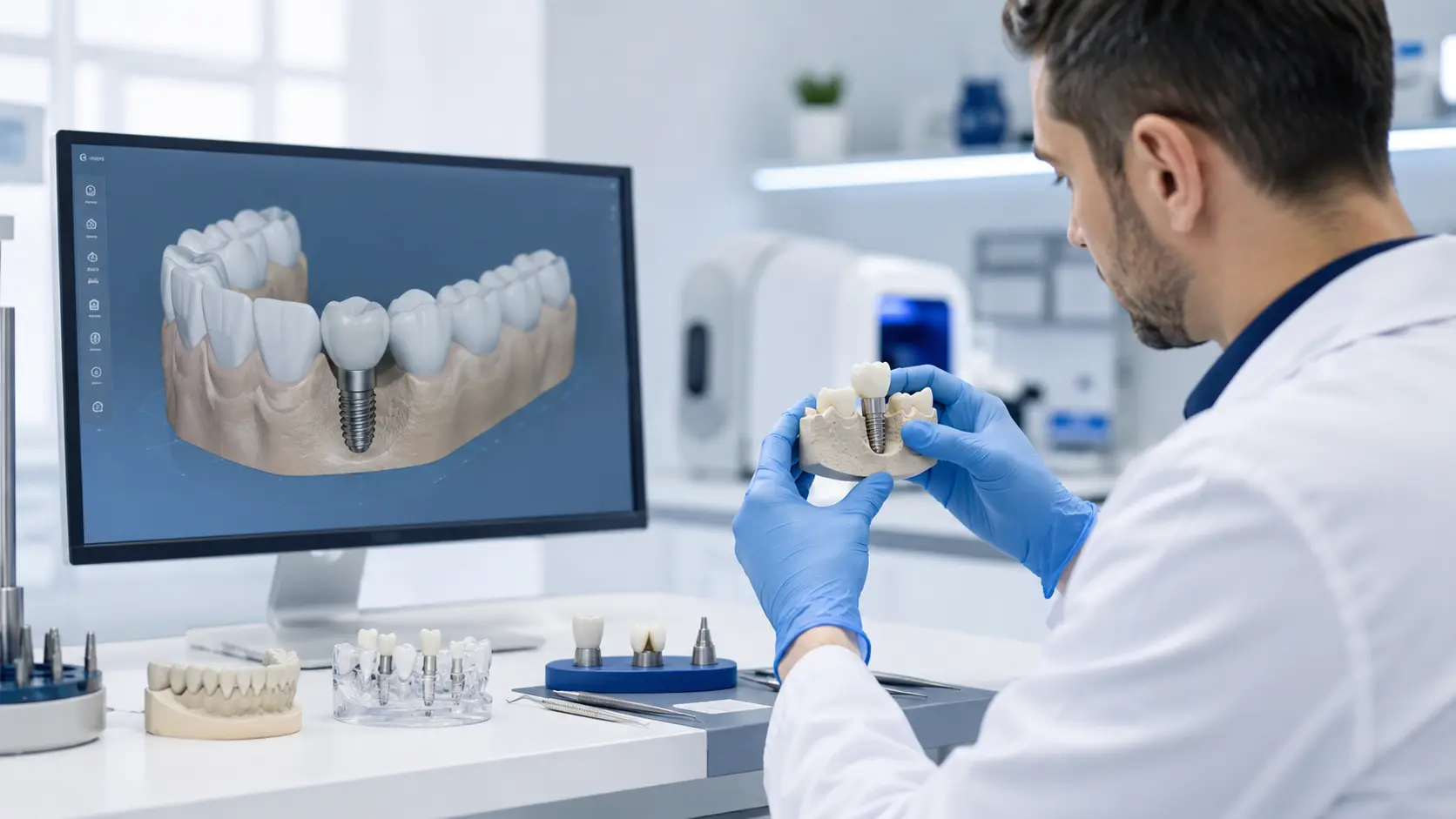
How Do 3D Printed Nightguards Help Dental Offices Manage Bruxism Cases?
3D printed nightguards help dental offices manage bruxism cases by giving dentists a more controlled appliance workflow, stronger digital record keeping, and more flexibility in occlusal design. For patients who clench or grind, a nightguard is often recommended to help protect teeth, restorations, and dental work from excessive wear. For dental practices, the challenge is creating an appliance that fits comfortably, supports the dentist’s occlusal goals, and can be remade or adjusted efficiently when needed.
Bruxism cases are not all the same. Some patients need a flat plane appliance. Some need canine guidance. Some may need an anterior ramp. Others may need a thinner guard that follows the shape of the teeth with minimal occlusal preference. The dentist’s treatment plan should guide the appliance design, and the lab should have the tools to fabricate that appliance accurately.
Utica Dental Laboratory supports dental practices with 3D printed nightguards designed for modern case submission and appliance fabrication. By combining digital records, intraoral scan compatibility, and lab communication, dental offices can manage bruxism-related appliance cases with a more predictable process.
Table of Contents
- Why Bruxism Cases Need Careful Appliance Planning
- What 3D Printed Nightguards Do for Dental Offices
- Digital Records Make Replacement Easier
- Occlusal Design Options Help Match the Case
- Comfort and Fit Matter for Patient Compliance
- Digital Case Submission Can Streamline the Workflow
- When Stone Models Still Fit the Workflow
- Connecting Nightguards With Other Oral Appliance Cases
- Nightguard Case Submission Checklist
- Frequently Asked Questions
Why Bruxism Cases Need Careful Appliance Planning
Bruxism-related cases can look simple at first. A patient reports grinding or clenching, the dentist takes records, and the lab fabricates a nightguard. In practice, however, these cases benefit from careful planning because the appliance must fit the patient’s mouth, support the dentist’s occlusal plan, and be comfortable enough for consistent wear.
A poorly planned nightguard can create problems for both the patient and the dental office. If the appliance feels too bulky, the patient may not wear it. If the occlusion is not planned properly, the dentist may spend more time adjusting it at delivery. If the records are not stored or duplicated easily, replacing a lost or damaged appliance may require starting from the beginning.
That is why dental offices should treat nightguard cases as appliance design cases, not just simple lab orders. The lab needs accurate records and clear instructions. The dentist needs to decide what type of occlusal scheme is appropriate. The patient needs an appliance that is comfortable, protective, and easy to use.
What 3D Printed Nightguards Do for Dental Offices
3D printed nightguards can help dental offices create a more efficient and repeatable appliance workflow. Instead of relying only on traditional thermoformed methods, a digital design and print workflow can give the lab more control over appliance shape, occlusal design, and stored case data.
For dental practices, this can be helpful when managing patients who need replacement appliances, spare appliances, or a nightguard with a specific occlusal design. A digital workflow can also make communication easier because the case can be connected to a scan, design file, and appliance specification.
The benefit is not only fabrication. It is case management. When a dental office has a predictable nightguard workflow, the team can submit cases more efficiently, reduce confusion with the lab, and give patients clearer expectations about the appliance process.
Digital Records Make Replacement Easier
One of the biggest advantages of 3D printed nightguards is digital record keeping. When a case is created digitally, the office and lab can maintain a better record of the appliance design. This is useful when a patient loses a nightguard, damages one, or wants a spare.
Traditional appliance workflows can sometimes require new impressions or new records when a guard needs to be replaced. With digital records, the process may be more efficient because the previous design can be referenced. This can save time for the office and reduce inconvenience for the patient.
For bruxism patients, replacement is a practical concern. Patients who clench or grind heavily may eventually wear down or damage an appliance. Some patients also travel, misplace their guard, or ask for an additional appliance to keep in another location. Digital records help make those scenarios easier to manage.
Occlusal Design Options Help Match the Case
Not every bruxism case needs the same occlusal design. Some patients may benefit from a flat plane nightguard. Others may require canine guidance, an anterior ramp, or a thinner appliance design depending on the dentist’s goals. The ability to choose an occlusal design helps the dentist match the appliance to the case instead of forcing every patient into one standard style.
This is important because bruxism patients can present with different conditions. Some may have worn dentition. Some may have crowns, veneers, bridges, implants, or other restorations that need protection. Others may have parafunctional habits that require careful occlusal planning. The dentist’s diagnosis and clinical judgment should guide the design.
With a lab-supported 3D printed workflow, the prescription can include specific design preferences. This helps the lab understand whether the dentist wants a flat plane, canine guidance, anterior ramp, or a slimmer design. Clear instructions reduce guesswork and make the delivery appointment more predictable.
Comfort and Fit Matter for Patient Compliance
A nightguard only helps if the patient wears it. Comfort and fit are major factors in patient compliance. If the appliance feels too bulky, too tight, unstable, or difficult to insert, the patient may stop using it even if the dentist recommends consistent wear.
3D printed nightguards can support a more controlled fit when the records are accurate. Utica Dental Laboratory’s 3D printed nightguard workflow is designed around digital or physical records, appliance design, and material properties that support comfortable insertion and patient use.
Dental offices can improve the patient experience by sending complete records and clear appliance instructions. The better the case submission, the easier it is for the lab to fabricate a guard that fits the patient’s mouth and supports the dentist’s appliance goals.
Digital Case Submission Can Streamline the Workflow
Digital case submission can make nightguard cases easier for dental offices. Instead of relying only on physical models, practices can submit intraoral scans when available. This can reduce shipping steps, help preserve records, and make appliance fabrication more efficient.
Utica Dental Laboratory’s digital impression systems page explains that practices can send digital cases through common scanning systems. This supports a more modern workflow for offices that already use intraoral scanners.
For nightguard cases, digital submission works best when the scan is complete and accurate. The lab needs clear capture of the teeth, margins of the arch, bite relationship, and opposing arch as needed. Missing scan data can lead to delays or questions before fabrication.
Dental teams should review scans before sending the case. If a scan has missing surfaces, poor bite alignment, or incomplete arch detail, the appliance may not be as predictable. A careful scan review can prevent unnecessary back-and-forth with the lab.
When Stone Models Still Fit the Workflow
Digital scans are helpful, but they are not the only option. Stone models can still be accepted for nightguard cases when the practice is not submitting digitally or when a physical model is preferred. This gives dental offices flexibility based on their equipment, case type, and workflow.
The key is accuracy. Whether the office sends an intraoral scan or stone model, the records need to represent the patient’s dentition clearly. Distortion, bubbles, missing anatomy, or poor bite records can affect appliance fit.
For offices sending physical cases, using the correct forms and shipping process helps reduce delays. Utica Dental Laboratory’s shipping and forms page provides access to order forms, shipping label resources, and case submission materials that help practices send cases correctly.
Connecting Nightguards With Other Oral Appliance Cases
Nightguards are one part of a larger oral appliance category. Dental offices may also manage sports mouthguards, sleep-related appliances, orthodontic appliances, and other protective or functional devices. Each appliance type has a different purpose, so the case prescription should be specific.
For example, a nightguard for bruxism is not the same as a sports mouthguard. It is also not the same as an oral appliance used for sleep-related breathing concerns. The dentist should identify the clinical purpose of the appliance and communicate that clearly to the lab.
Utica Dental Laboratory also offers mouthguards and sleep apnea appliance options, including professional-grade sports mouthguards and EMA oral appliances. This makes it easier for dental practices to connect related appliance needs while keeping each case type properly defined.
Clear case identification matters. If the patient needs a bruxism nightguard, the prescription should say that. If the patient needs a sports mouthguard or a sleep-related appliance, the prescription should match that appliance type. This avoids confusion and supports better lab fabrication.
Nightguard Case Submission Checklist
A repeatable checklist can help dental teams submit bruxism nightguard cases more consistently. This is especially useful in busy offices where different team members may take scans, prepare cases, or communicate with the lab.
- Confirm the appliance type requested
- Send a complete intraoral scan or accurate stone model
- Include opposing arch records when needed
- Provide a clear bite record when required
- Specify the desired occlusal design
- Note whether the dentist wants flat plane, canine guidance, anterior ramp, or another design
- Identify any crowns, veneers, implants, bridges, or restorations that need protection
- Include patient-specific concerns such as tight fit sensitivity or previous appliance issues
- Use the correct lab form or digital prescription
- Confirm shipping or digital submission details before sending
This checklist helps reduce missing information. It also gives the lab more direction, which can reduce adjustments and improve the delivery experience.
How 3D Printed Nightguards Support Dental Office Efficiency
For dental offices, efficiency is not only about faster fabrication. It is about reducing unnecessary steps. A predictable 3D printed nightguard workflow can help the team submit cases faster, store case records more easily, and communicate design preferences more clearly.
When the office has a strong appliance workflow, patients also benefit. The patient receives a custom appliance that is designed for their case. The dentist can explain why the guard was recommended. The team can provide clearer instructions about use, care, replacement, and follow-up.
Bruxism management often requires ongoing monitoring. A nightguard can help protect teeth and restorations, but the dentist may still need to evaluate wear patterns, symptoms, appliance fit, and changes over time. A reliable lab workflow supports that ongoing care by making appliance fabrication and replacement more manageable.
Final Thoughts
3D printed nightguards help dental offices manage bruxism cases by improving appliance design flexibility, supporting digital records, and creating a more repeatable case submission process. For patients who clench or grind, a well-designed nightguard can be an important part of protecting teeth and dental restorations. For dental practices, the right lab workflow can reduce friction from scan submission to appliance delivery.
The best results come from accurate records, clear occlusal instructions, and strong communication between the office and lab. Whether the practice sends intraoral scans or stone models, the case should include enough information for the lab to fabricate the appliance according to the dentist’s clinical goals.
To learn more about appliance options for bruxism-related cases, visit Utica Dental Laboratory’s 3D Printed Nightguards page.
Frequently Asked Questions
How do 3D printed nightguards help with bruxism cases?
3D printed nightguards help dental offices manage bruxism cases by supporting custom appliance design, digital records, replacement workflows, and different occlusal scheme options based on the dentist’s treatment plan.
Do 3D printed nightguards cure bruxism?
No. A nightguard does not cure bruxism. It is an appliance that may help protect teeth and restorations from clenching or grinding forces. Dentists should continue evaluating the patient’s symptoms, occlusion, oral health, and appliance wear over time.
Can dental offices send intraoral scans for nightguard cases?
Yes. Dental offices can send digital scans when available. Complete scan data, clear bite information, and accurate arch capture help the lab fabricate the appliance more predictably.
Are stone models still accepted for 3D printed nightguards?
Yes. Stone models can still be used when a practice is not submitting digital scans. The model should be accurate, clean, and complete so the lab can fabricate a better-fitting appliance.
What should dentists include when submitting a nightguard case?
Dentists should include the appliance type, upper or lower arch preference, occlusal design preference, complete scan or model, opposing arch when needed, bite record when required, and any special notes about restorations, comfort, or previous appliance issues.