What Makes Denture Fabrication More Predictable for Dental Practices?
Denture fabrication becomes more predictable for dental practices when the clinical records, impression quality, bite information, tooth setup expectations, and lab communication are clear from the beginning of the case. For dentists, predictability is not only about receiving a finished denture. It is about reducing remakes, avoiding unnecessary chair time, improving appointment flow, and giving patients a prosthetic result that supports function, fit, and esthetics.Every denture case has details that can affect the final result. Ridge anatomy, tissue condition, vertical dimension, occlusion, shade selection, midline, smile line, phonetics, retention, and patient expectations all influence how the case should be designed and processed. When those details are incomplete or unclear, the dental lab has to make assumptions. Those assumptions can lead to extra adjustments, resets, relines, or remakes.
That is why working with a dental laboratory that understands both traditional and digital workflows can make a major difference. Utica Dental Laboratory supports dental practices with denture fabrication options that include milled dentures, 3D printed dentures, monolithic try-ins, and traditional dentures. With the right case information and a consistent lab process, dentists can create a smoother denture workflow from impression to final delivery.
Table of Contents
- Why Predictability Matters in Denture Cases
- Complete Records Help the Lab Design Better Dentures
- Accurate Impressions Reduce Fit Issues
- Bite Records and Vertical Dimension Guide the Setup
- Digital Denture Workflows Improve Case Control
- Partial Denture Planning Requires Extra Detail
- Implant Overdentures Need Restorative Coordination
- Repair Cases Benefit from Clear Instructions
- Communication Makes Denture Fabrication More Predictable
- Frequently Asked Questions
Why Predictability Matters in Denture Cases
Denture cases can become stressful for a dental practice when the workflow is unpredictable. A patient may expect a fast, comfortable, natural-looking solution, while the clinical team has to manage records, appointments, try-ins, adjustments, and delivery. If one step is rushed or unclear, the entire case can be delayed.
Predictable denture fabrication helps the dental practice create a more organized experience. The dentist can plan appointments with more confidence. The assistant can collect the right materials and records. The patient can better understand the process. The dental lab can design and process the case with fewer questions and fewer assumptions.
For many practices, predictability also protects productivity. A remake or major adjustment does not only affect one patient. It can interrupt the schedule, reduce available chair time, and create extra communication between the office and the lab. A more complete case submission helps reduce those problems before they happen.
Complete Records Help the Lab Design Better Dentures
The first major factor in predictable denture fabrication is the quality of the records sent to the lab. A denture is not designed from a model alone. The lab needs enough clinical information to understand the patient’s anatomy, esthetic needs, bite relationship, and functional goals.
Useful records may include final impressions, bite rims or bite registrations, shade selection, mould selection, photos, midline notes, smile line notes, occlusal plane guidance, existing denture information, and any special instructions from the dentist. For immediate dentures, extraction details and preoperative references may also help the lab create a more accurate plan.
When a case prescription simply says “make denture” without enough supporting detail, the lab has limited guidance. A more detailed prescription helps answer the practical questions that matter: Should the tooth position follow the existing denture? Is the patient unhappy with the current setup? Is there a specific shade request? Does the dentist want a try-in? Are there tissue limitations that could affect retention?
Clear records give the lab a better starting point. They also make it easier to identify potential concerns before the case is processed. This is one of the simplest ways dental practices can improve denture outcomes without adding unnecessary complexity to the workflow.
Accurate Impressions Reduce Fit Issues
Fit is one of the most important parts of a successful denture case. Even if the esthetics look excellent, a denture that does not seat properly or lacks stability can lead to patient frustration. Predictable fit starts with accurate impressions and clear capture of the denture-bearing areas.
For complete dentures, the impression should record the anatomy needed to support retention, extension, and tissue adaptation. Border areas, vestibular depth, frenum movement, palate form, ridge shape, and tissue condition all influence the final prosthesis. If key areas are distorted, missed, or overextended, the finished denture may require more chairside adjustment.
Digital records can also support the process when captured correctly. Intraoral scans and desktop scans can help create a controlled digital record, but the scan must still capture the necessary anatomy. Missing data, poor tissue capture, or incomplete borders can still affect the final result.
For practices using digital scans, it is helpful to confirm that the scan is complete before submitting the case. A high-quality digital file can support a more efficient lab process, especially when the case is planned for milled dentures, 3D printed dentures, or a digital try-in.
Bite Records and Vertical Dimension Guide the Setup
The bite record is another major part of denture predictability. A denture is not only a replacement for missing teeth. It must support speech, chewing, facial support, esthetics, and proper jaw relationship. If the vertical dimension or centric relation record is unclear, the tooth setup becomes less predictable.
Dental practices can help the lab by providing stable bite rims, accurate jaw relation records, and clear notes when the case is unusual. For example, a patient with a worn existing denture, collapsed bite, asymmetry, or limited ridge support may need additional guidance. Photos can also help show lip support, smile line, tooth display, and midline.
Try-ins are valuable because they allow the dentist and patient to evaluate the setup before final processing. A try-in can help confirm esthetics, tooth position, phonetics, bite relationship, and patient approval. In cases where expectations are high or anatomy is challenging, a try-in can prevent larger problems later.
Predictable denture fabrication often comes down to eliminating uncertainty. Bite records and setup verification help remove guesswork before the final denture is made.
Digital Denture Workflows Improve Case Control
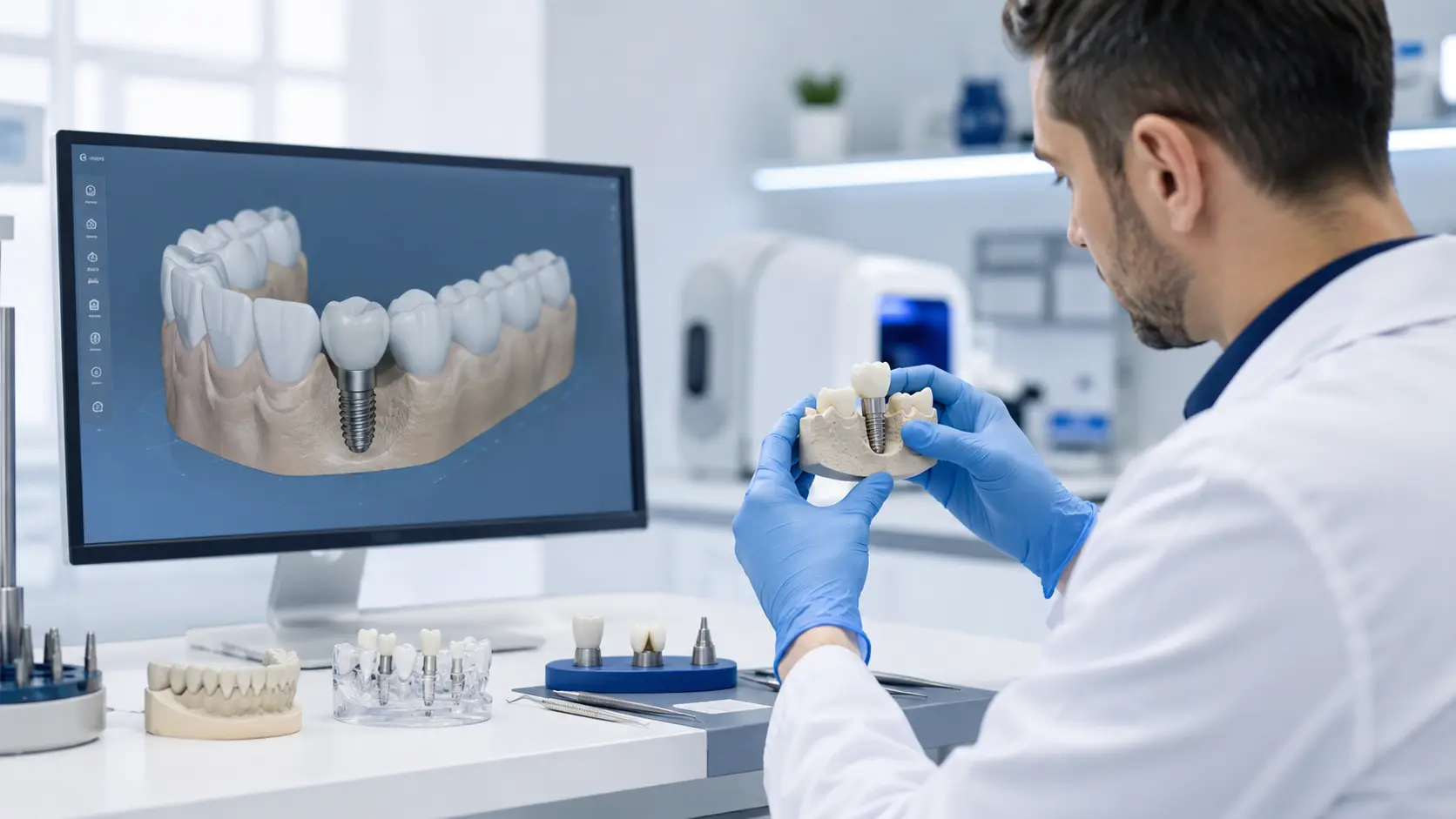
Digital denture workflows can help dental practices and labs create more repeatable outcomes. Digital design, milling, 3D printing, and digital records allow the lab to preserve case data and control parts of the process that were traditionally harder to reproduce.
Utica Dental Laboratory offers milled and 3D denture options, including digital records from desktop scans or intraoral scans. Milled bases, 3D printed bases, denture teeth in Vita shades, and monolithic 3D printed try-ins can all support a more controlled denture process when the case is appropriate.
One major advantage of a digital workflow is record retention. If a denture is lost, damaged, or needs to be duplicated, digital records can make future case management easier. Digital design can also help the lab review tooth position, base design, and material selection with greater consistency.
However, digital dentures still depend on the quality of the clinical records. A digital workflow cannot fully correct an inaccurate bite, incomplete scan, or unclear prescription. The best results happen when strong clinical records are combined with a lab process that can use digital tools effectively.
Partial Denture Planning Requires Extra Detail
Partial denture cases add another layer of planning because the prosthesis must work with remaining teeth, soft tissue, undercuts, clasps, rests, and occlusion. The more complex the partial, the more important it is for the dentist and lab to communicate clearly.
For practices planning removable partial dentures, it helps to include the design preferences, clasp locations, missing teeth, rest seat information, shade, opposing arch details, and any esthetic concerns. The lab also needs to understand whether the partial is intended as a long-term solution, transitional appliance, or part of a staged treatment plan.
Utica Dental Laboratory offers 3D partials, including flexible partial options, 3D printed metal partials, and acrylic 3D partial solutions. These options can help practices match the prosthesis design to the clinical situation and patient expectations.
Predictability in partial denture fabrication depends on planning. A partial that looks simple may still require careful consideration of path of insertion, retention, tissue support, clasp visibility, and future adjustments. When the prescription and records explain these details, the lab can fabricate with greater confidence.
Implant Overdentures Need Restorative Coordination
Implant overdenture cases require even more coordination because the prosthesis must relate to both the soft tissue anatomy and the implant components. Locator position, attachment selection, available restorative space, implant angulation, bite relationship, and patient function all matter.
For predictable implant overdenture cases, the dental practice should provide accurate implant information, final impressions or digital scans, bite records, shade preferences, and clear instructions for the desired prosthetic outcome. If implant analogs, caps, or other case components are involved, confirming those details early can help prevent delays.
Utica Dental Laboratory provides implant overdentures, including locator overdenture cases that can be traditionally or digitally fabricated. Connecting denture planning with implant restorative details helps the lab support a smoother workflow from design to delivery.
When practices treat implant overdenture cases like standard denture cases, important details can be missed. A predictable result requires both removable prosthetic planning and implant restorative awareness.
Repair Cases Benefit from Clear Instructions
Not every denture-related case is a new prosthesis. Dental practices also need support for fractured dentures, fractured acrylic partials, tooth additions, relines, clasp additions, reattached teeth, soft relines, and other repair situations. These cases often come with urgency because the patient may be without a functional appliance.
Repair predictability depends on sending the existing prosthesis, the necessary models or impressions, the missing tooth or broken part when available, and clear instructions about the desired repair. The lab needs to know whether the goal is a simple repair, reinforcement, reline, tooth addition, clasp addition, or a larger corrective procedure.
Utica Dental Laboratory’s denture repair services include many same-day and short-turnaround repair categories, depending on the case type. For dental practices, this kind of repair support is important because patients often need their appliance returned as quickly as possible.
Clear repair instructions help the lab avoid delays. For example, if a tooth needs to be reattached, sending the existing tooth when available can matter. If a reline is needed, the impression and tissue information must support that process. If a clasp must be added, the abutment tooth and requested clasp location should be clear.
Communication Makes Denture Fabrication More Predictable
The most predictable denture cases usually have one thing in common: strong communication between the dental practice and the lab. Even with good impressions and records, case notes still matter. A dentist may see something clinically that the lab cannot know from a model or scan alone.
Useful communication can include patient concerns, previous denture problems, shade preferences, esthetic goals, functional limitations, ridge concerns, gagging issues, clasp visibility concerns, or timeline requirements. These notes help the lab make better decisions and ask better questions when something needs clarification.
Dental practices can also improve predictability by creating a repeatable denture submission checklist. This does not need to be complicated. The checklist can include impression type, bite record, shade, mould, midline, smile line, photos, existing denture notes, try-in request, material preference, due date, and any special instructions.
When the same checklist is used for each denture case, the entire team becomes more consistent. Assistants know what to gather. The dentist knows what to verify. The lab receives better information. The patient benefits from a smoother process.
Key Factors That Improve Denture Case Predictability
- Accurate final impressions or complete digital scans
- Stable bite records and clear vertical dimension information
- Shade, mould, midline, and smile line guidance
- Photos when esthetics or tooth position are important
- Clear notes about existing denture issues
- Try-in approval when needed
- Material selection based on clinical needs
- Detailed repair instructions for urgent cases
- Implant component details for overdenture cases
- Consistent communication between the practice and lab
Choosing the Right Denture Workflow for the Case
Different patients and clinical situations may call for different denture workflows. A traditional denture may be appropriate for one case, while a milled or 3D printed denture may be a better fit for another. Some patients may need a partial denture, while others may benefit from an implant overdenture plan. Repair cases may require a fast, practical solution rather than a completely new prosthesis.
The role of the lab is to support the dentist with a fabrication process that matches the case. A full-service dental lab can help practices handle complete dentures, partial dentures, implant overdentures, and repairs without forcing every case into the same workflow.
That flexibility matters. Dental practices need a lab partner that can understand the case type, use the right fabrication method, and communicate clearly when additional information is needed. Predictability improves when the case is routed through the correct workflow from the start.
Final Thoughts on Predictable Denture Fabrication
Denture fabrication is most predictable when dental practices and labs work from complete, accurate, and clearly communicated case information. The best outcomes are not created by one step alone. They come from the combination of strong clinical records, accurate impressions, stable bite information, appropriate material selection, thoughtful try-ins, and responsive lab communication.
For dental practices, improving denture predictability can reduce remakes, save chair time, and create a better patient experience. For the lab, complete records make it easier to design, fabricate, repair, and support the case with fewer assumptions.
Utica Dental Laboratory supports dental practices with denture solutions, 3D partials, implant overdentures, and denture repair services. To review available denture options or submit a case, visit the Utica Dental Laboratory dentures page.
Frequently Asked Questions
What makes denture fabrication more predictable?
Denture fabrication becomes more predictable when the dental practice sends accurate impressions or scans, stable bite records, clear shade and setup instructions, photos when needed, and complete case notes. These details help the lab reduce guesswork during design and processing.
Why are bite records important for denture cases?
Bite records help the lab understand the patient’s jaw relationship, vertical dimension, and occlusal setup. When bite information is unclear, the final denture may require more adjustment or a reset before processing.
Are digital dentures more predictable than traditional dentures?
Digital dentures can improve repeatability and case control when the records are accurate. However, the final result still depends on the quality of the impression or scan, the bite record, and the clinical information submitted with the case.
When should a dental practice request a try-in?
A try-in is useful when esthetics, tooth position, bite relationship, or patient approval need to be confirmed before final processing. Try-ins are especially helpful for complex cases, high-expectation patients, or cases with major changes from the existing denture.
What information should be sent for denture repair cases?
Repair cases should include the existing prosthesis, the broken tooth or part when available, a model or impression when needed, and clear instructions about the requested repair. Details such as reline needs, clasp location, tooth addition, or reinforcement should be stated clearly.