What Should Dentists Know About All-on-X Hybrid Lab Cases?
All-on-X hybrid lab cases require careful planning between the dentist, surgical team, restorative team, and dental laboratory because full-arch implant restorations depend on accuracy at every step. Unlike a single crown or a simple removable appliance, an All-on-X case involves implant position, prosthetic space, bite records, esthetics, material selection, verification, provisionalization, and final prosthesis design.
For dental practices, these cases can be high-value treatment opportunities. They can also become complicated when records are incomplete, implant information is missing, scans are unclear, or expectations are not communicated early. The best outcomes usually come from a structured workflow where the clinical team and lab understand the case before the final restoration is fabricated.
Utica Dental Laboratory supports dental practices with All-on-X hybrid and full-arch zirconia implant prosthesis workflows. For dentists, understanding what the lab needs before the case begins can help reduce delays, remakes, chairside adjustments, and patient frustration.
Table of Contents
- What Is an All-on-X Hybrid Lab Case?
- Why Full-Arch Implant Planning Matters
- Records the Lab Needs for All-on-X Cases
- Implant Details Must Be Clear
- Digital Scans Can Improve Workflow Accuracy
- Why Try-Ins Are Important
- Zirconia Planning for Full-Arch Restorations
- The Role of the PMMA Provisional
- All-on-X vs Implant Overdentures
- Lab Communication Prevents Case Delays
- Frequently Asked Questions
What Is an All-on-X Hybrid Lab Case?
An All-on-X hybrid lab case is a full-arch implant restoration supported by multiple implants. The “X” refers to the number of implants used to support the prosthesis. These cases are commonly used for edentulous or terminal dentition patients who need a fixed full-arch restorative solution.
From the lab perspective, an All-on-X case is not only a matter of designing teeth. The restoration must fit passively, relate properly to the implants, support the bite, follow the esthetic plan, and meet the dentist’s restorative goals. Every part of the workflow affects the final prosthesis.
These cases often involve a combination of traditional prosthodontic principles and modern CAD/CAM technology. The lab must understand tooth position, restorative space, soft tissue design, occlusion, implant access channels, screw-retained design requirements, and final material selection.
Because of that complexity, All-on-X hybrid cases should be approached as planned restorative cases, not just final lab prescriptions. The earlier the lab is involved, the easier it is to identify potential concerns before they become larger problems.
Why Full-Arch Implant Planning Matters
Full-arch implant cases require a higher level of planning than many other restorative cases. A small issue in the records can affect the entire arch. An inaccurate bite, incomplete scan, unclear implant information, or limited restorative space can create problems with fit, strength, esthetics, speech, and hygiene access.
Good planning helps the dentist and lab answer important questions before final fabrication:
- Is there enough restorative space for the planned prosthesis?
- Are the implant positions favorable for a screw-retained design?
- Is the vertical dimension accurate?
- Has the tooth setup been approved?
- Are the access channels acceptable esthetically and functionally?
- Does the patient need a provisional phase before the final zirconia arch?
- Are there any hygiene or tissue design concerns?
When those questions are answered early, the lab can design with more confidence. When they are ignored, the case can become reactive. That means the dentist, patient, and lab may spend more time correcting issues that could have been prevented.
Records the Lab Needs for All-on-X Cases
The success of an All-on-X hybrid case depends heavily on the records sent to the lab. A full-arch case should include more than a simple impression or scan. The lab needs enough information to understand the patient’s current condition, implant position, prosthetic goals, and desired final result.
Useful records may include final impressions or digital scans, implant-level information, bite registration, opposing arch scan or model, photographs, shade selection, midline and smile line notes, approved tooth setup, vertical dimension records, and details about the temporary or existing prosthesis.
Photographs are especially helpful for full-arch cases. They can show the patient’s lip support, smile line, midline, tooth display, facial profile, and esthetic expectations. Without photos, the lab may not have enough context to evaluate how the prosthesis should support the face and smile.
The prescription should also explain the stage of the case. Is the lab designing a wax try-in? Is the case moving into a PMMA provisional? Is the final zirconia arch ready for fabrication? Is the dentist requesting a duplicate of an approved setup? These details help the lab route the case correctly.
Implant Details Must Be Clear
Implant information is one of the most important parts of an All-on-X case. The lab needs to know the implant system, platform, restorative components, scan body information, abutment requirements, and whether the restoration will be screw-retained or designed around another restorative approach.
Missing or incorrect implant information can delay the case. It can also lead to component mismatch, inaccurate design, or a restoration that cannot be seated properly. For full-arch cases, those risks are magnified because multiple implants must work together in one prosthetic design.
This is where related implant workflows become important. Utica Dental Laboratory supports custom abutments and zirconia, which can help dentists manage implant restorative planning when the case requires custom components, zirconia design, or implant-specific restorative coordination.
For All-on-X hybrid cases, the dental practice should verify implant details before submission. This includes confirming the implant brand, size, platform, scan body compatibility, and any restorative parts being sent with the case. The clearer the implant information, the smoother the lab workflow becomes.
Digital Scans Can Improve Workflow Accuracy
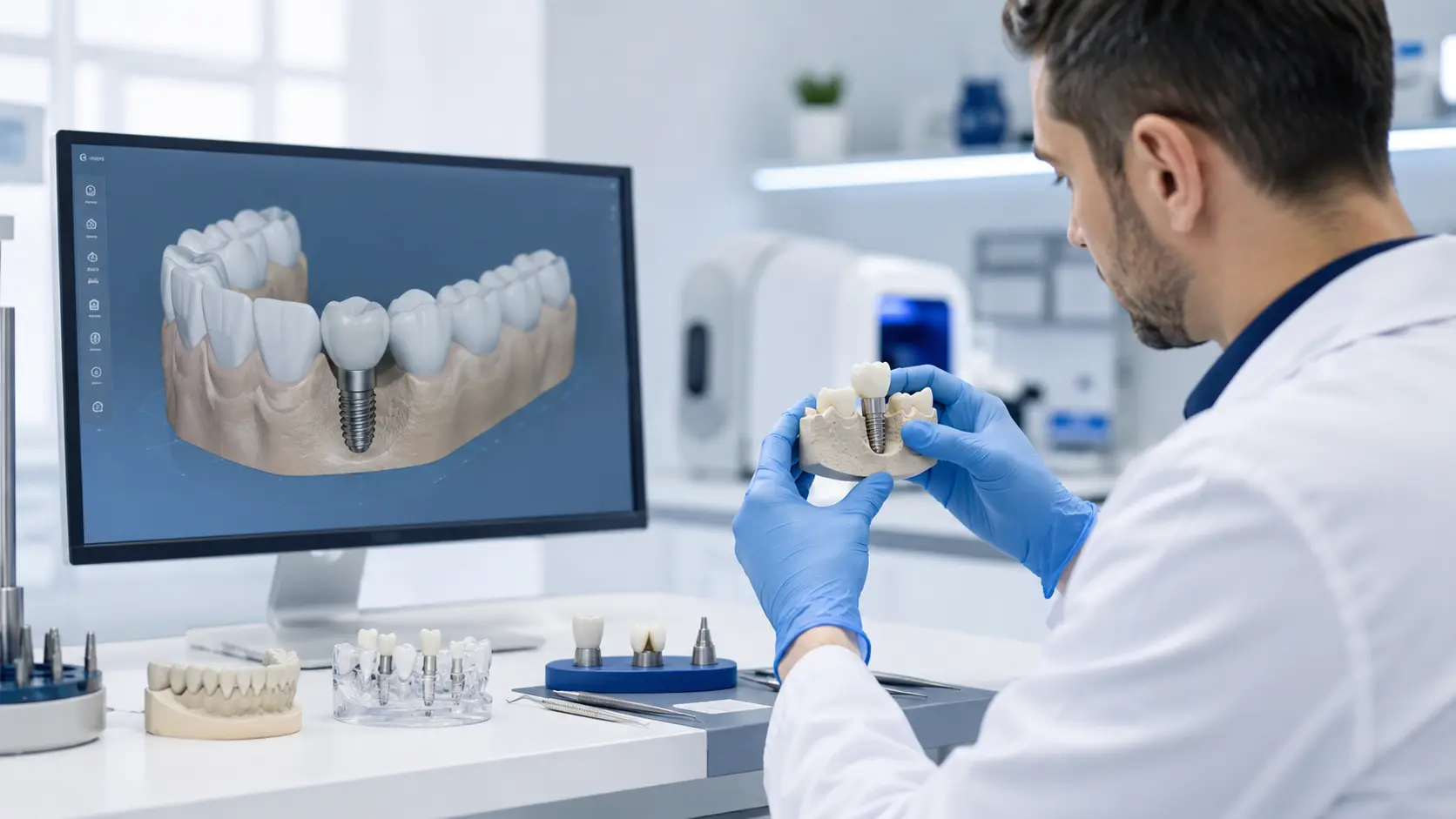
Digital impressions can support a more efficient All-on-X workflow when the scan data is complete and accurate. Digital scans can help the lab evaluate implant position, soft tissue contours, opposing arch relationship, and restorative space. They can also support CAD/CAM design and reduce some of the variability associated with analog records.
However, digital scanning does not remove the need for clinical accuracy. A scan with missing tissue data, incomplete implant scan body capture, poor bite alignment, or unclear opposing arch information can still create problems. The quality of the digital file matters as much as the method used to capture it.
Dental practices should make sure implant scan bodies are fully seated and clearly captured. The lab also needs an accurate bite record and opposing arch scan. For full-arch implant cases, the scan must provide enough information for the lab to design a restoration that fits the implants and functions properly in the patient’s bite.
Utica Dental Laboratory’s digital impression systems workflow allows practices to send cases digitally from common intraoral scanning systems or send STL files directly. This can be helpful for practices that want a more streamlined submission process for implant and full-arch cases.
Why Try-Ins Are Important
Try-ins are a key step in many All-on-X hybrid lab cases. A try-in gives the dentist and patient an opportunity to evaluate tooth position, shade, shape, occlusion, phonetics, esthetics, and vertical dimension before the final prosthesis is fabricated.
For full-arch implant cases, the try-in is more than a preview. It is a verification step. It helps confirm that the planned restoration matches the patient’s clinical needs and esthetic goals. If changes are needed, it is much easier to adjust the setup before the final material is processed.
A screw-retained wax try-in can help evaluate the planned tooth arrangement and bite relationship. Once the try-in is approved, the case can move forward with more confidence. This helps reduce the risk of creating a final prosthesis that requires major changes after delivery.
Dental practices should treat try-in appointments as important restorative checkpoints. The dentist should evaluate the bite, midline, smile line, lip support, tooth display, phonetics, and patient feedback. Clear approval or detailed requested changes should then be sent back to the lab.
Zirconia Planning for Full-Arch Restorations
Zirconia is commonly used for full-arch implant restorations because it offers strength, esthetics, and long-term restorative potential. However, zirconia still requires careful design. The final prosthesis must have proper thickness, support, occlusion, and passive fit.
For dentists, the key is not simply choosing zirconia. The case must be planned so zirconia can perform properly. That means the lab needs accurate records, confirmed implant positions, enough restorative space, proper bite information, and approval of the tooth setup before final fabrication.
Design decisions can affect cleansability, tissue contour, esthetics, speech, and maintenance. The emergence profile and tissue surface should be planned in a way that supports hygiene access while still meeting the patient’s esthetic expectations. The occlusal scheme should also be reviewed carefully because full-arch implant prostheses do not respond like natural teeth.
When zirconia planning is rushed, problems may appear later as esthetic compromises, access channel concerns, occlusal imbalance, hygiene difficulty, or prosthetic complications. A structured lab workflow helps reduce those risks.
The Role of the PMMA Provisional
A PMMA provisional can be an important step before the final full-arch zirconia prosthesis. It allows the dentist and patient to evaluate the proposed design in function before committing to the final restoration. This phase can reveal issues with esthetics, bite, speech, hygiene access, and patient comfort.
For the lab, the provisional can serve as a functional test of the approved design. If the patient adapts well and the dentist confirms the setup, the final prosthesis can be designed with stronger confidence. If changes are needed, those adjustments can be made before moving to the final zirconia arch.
Dental practices should use the provisional phase intentionally. The patient’s feedback should be documented. The dentist should evaluate occlusion, phonetics, cleansability, lip support, smile display, and access channel position. If the final prosthesis should copy the provisional, that instruction should be clear.
The provisional phase helps bridge the gap between approved design and final restoration. It is one of the most practical ways to reduce uncertainty in complex full-arch implant cases.
All-on-X vs Implant Overdentures
All-on-X hybrid restorations and implant overdentures both serve edentulous patients, but they are not the same type of prosthetic solution. An All-on-X hybrid restoration is typically fixed and screw-retained, while an implant overdenture is removable and retained by implant attachments.
Both options can be valuable, but the right choice depends on the patient’s anatomy, budget, hygiene ability, restorative goals, implant position, bone support, and expectations. A fixed full-arch zirconia prosthesis may be appropriate for one patient, while an overdenture may be a better option for another.
Utica Dental Laboratory also supports implant overdentures, including locator overdenture cases. This gives dental practices another restorative pathway when a removable implant-supported prosthesis is a better match for the patient’s clinical situation.
For dentists, the important point is to plan the prosthetic outcome before the final lab stage. The lab can fabricate the case more predictably when the restorative goal is clear from the beginning.
Lab Communication Prevents Case Delays
Communication is one of the most important parts of a successful All-on-X hybrid lab case. Full-arch implant restorations involve many details, and even a small missing detail can slow down the case.
Dental practices can prevent many delays by sending a complete prescription, accurate implant information, clear photos, correct scan files, bite records, and detailed notes about the desired outcome. If the case has unique concerns, those concerns should be explained before design begins.
Helpful communication may include:
- Implant system and platform information
- Scan body details
- Approved vertical dimension
- Shade and tooth mould preferences
- Midline and smile line notes
- Photographs of the patient’s smile and profile
- Existing denture or temporary prosthesis notes
- Instructions for wax try-in, PMMA provisional, or final zirconia
- Any patient concerns about speech, esthetics, or hygiene
A predictable lab workflow does not happen by accident. It is built through complete records, careful verification, and timely communication between the practice and the lab.
Key Takeaways for Dentists
All-on-X hybrid lab cases can be highly rewarding for dental practices, but they require a structured approach. Dentists should understand what the lab needs before the case begins and should avoid sending incomplete information when the case is ready for design.
The most predictable All-on-X cases usually include accurate implant records, clear digital scans or impressions, bite verification, esthetic photos, try-in approval, provisional evaluation, and careful final zirconia planning. When those steps are followed, the lab can fabricate with fewer assumptions and the dentist can deliver with greater confidence.
Utica Dental Laboratory supports dental practices with full-arch zirconia implant prosthesis workflows, digital impression submission, custom abutments and zirconia, and implant overdenture options. To learn more about full-arch hybrid cases, visit the All-on-X Hybrids page.
Frequently Asked Questions
What is an All-on-X hybrid lab case?
An All-on-X hybrid lab case is a full-arch implant restoration supported by multiple implants. It usually involves implant records, bite information, esthetic planning, try-ins, provisionalization, and final prosthesis fabrication.
What records should dentists send for All-on-X cases?
Dentists should send accurate impressions or digital scans, implant system details, scan body information, bite records, opposing arch records, shade selection, photos, approved setup notes, and clear instructions for the stage of the case.
Why is a try-in important for full-arch implant cases?
A try-in helps verify tooth position, esthetics, occlusion, vertical dimension, phonetics, and patient approval before the final prosthesis is fabricated. It reduces the risk of major changes after final processing.
How do digital scans help All-on-X hybrid cases?
Digital scans can support CAD/CAM design and case efficiency when the scan data is complete. They help the lab evaluate implant position, tissue contours, opposing arch relationship, and restorative space.
What is the difference between All-on-X and implant overdentures?
All-on-X restorations are usually fixed, screw-retained full-arch prostheses. Implant overdentures are removable prostheses retained by implant attachments. The best option depends on the patient’s anatomy, expectations, hygiene ability, and restorative plan.